Why photos from a Polish store don't sell in Spain?
You send goods to a warehouse near Madrid, set up campaigns, and sales are stagnant. Your prices are fair, and descriptions are correct, but no one clicks on your offers. The problem often lies in what we see at first glance – in photos that are simply alien to a Spaniard.
Sterile white vs. southern sun
In Poland, we learned that a good product photo is one on a perfectly white background. It's supposed to be clean, almost laboratory-like. However, when we analyzed 43 accounts of our clients on Amazon ES, we noticed a strange correlation. Home products shown in raw, cold light had a 14% higher bounce rate than the same items in a warmer tone. A Spaniard isn't looking for sterility; they are looking for life and sun.
We did a simple test for a manufacturer of wooden kitchen accessories from Podlasie. Instead of photos from a shadowless tent, we used shots taken in natural afternoon light, where a piece of stone countertop was visible in the background. Nothing major, no big session. The result? The number of clicks rose from 1.2% to 1.9% in just 9 days. This shows that technical correctness in a photo loses to the vibe that a local customer recognizes as their own.
You don't have to hire a studio in Barcelona right away. It's enough if your graphic designer slightly turns up the color temperature during processing and adds natural-looking shadows. The point is for the product not to look like it's cut out from a newspaper, but like an object that actually stands on a table in a sunny home. We count every penny, so instead of a new session, start by improving the retouching of the 7 most important photos in your catalog.
A Spaniard doesn't look for pharmacy sterility in a store. They want to see the sun, even if they're only buying a cutting board.

A lonely product is a dead product for a Spaniard
In Polish e-commerce, the cult of minimalism prevails. We often show just the object, without people, without context. In Spain or Italy, culture is based on relationships and spending time together. If you sell a set of glasses and show only empty glass in the main photo, you lose the chance to attract attention. In those markets, so-called lifestyle shots, i.e., photos of the product in use, work much better.
A real-life example: our client selling blankets and home textiles. On Polish Allegro, 'flat lay' photos sold great. In Spain, it only took off when we showed these blankets on a sofa, with a cup of coffee and a book nearby. That built a story. A customer from Madrid isn't buying a piece of fabric measuring 150 by 200 cm. They are buying themselves a pleasant evening after work. Facts on the table: changing 3 photos in the product card increased conversion by 21% in three weeks.
An important detail is the surroundings. If part of an interior is visible in the photo, it must resemble homes in Southern Europe. Light walls, tiles on the floor instead of panels, a specific window layout. If you throw in a photo from a typical Polish apartment block from the 90s, a Spaniard will subconsciously feel that something doesn't fit here. These are nuances not seen in Excel, but seen in the wallet at the end of the month.
Text errors on graphics cost real euros
We often see so-called infographics with Polish sellers, where product advantages are described directly on the photo. This is a great method, as long as... you don't leave Polish inscriptions or poor automatic translations there. We saw an offer where a kitchen knife photo had the inscription 'Ostra stal' (Sharp steel). The Spanish translation was so unfortunate that it suggested a medical tool. Such an error in a PPC campaign can burn 413 euros in one weekend without a single sale.
Another issue is units of measurement and symbols. In Spain, no one thinks about how much 10 ounces is, but they also look specifically at dimensions given in millimeters for everyday products – they prefer centimeters. If your graphic designer prepared 12 info-boards, make sure the text is not only in Spanish but also fits local commercial vocabulary. No fluff: if you're not sure about the language, it's better to leave just the photo than to upload nonsense.
We also recommend checking the color scheme of inscriptions. In Spain, certain color combinations are associated with cheap discounters or private labels that customers avoid when making premium purchases. We usually suggest muted colors that don't cover the product itself. Remember that on Amazon, most people look at your photos on a 6-inch phone screen anyway. Inscriptions must be large, short, and concrete.
One translation error on a photo can burn an advertising budget faster than a bad price.
Models – does your face fit Madrid?
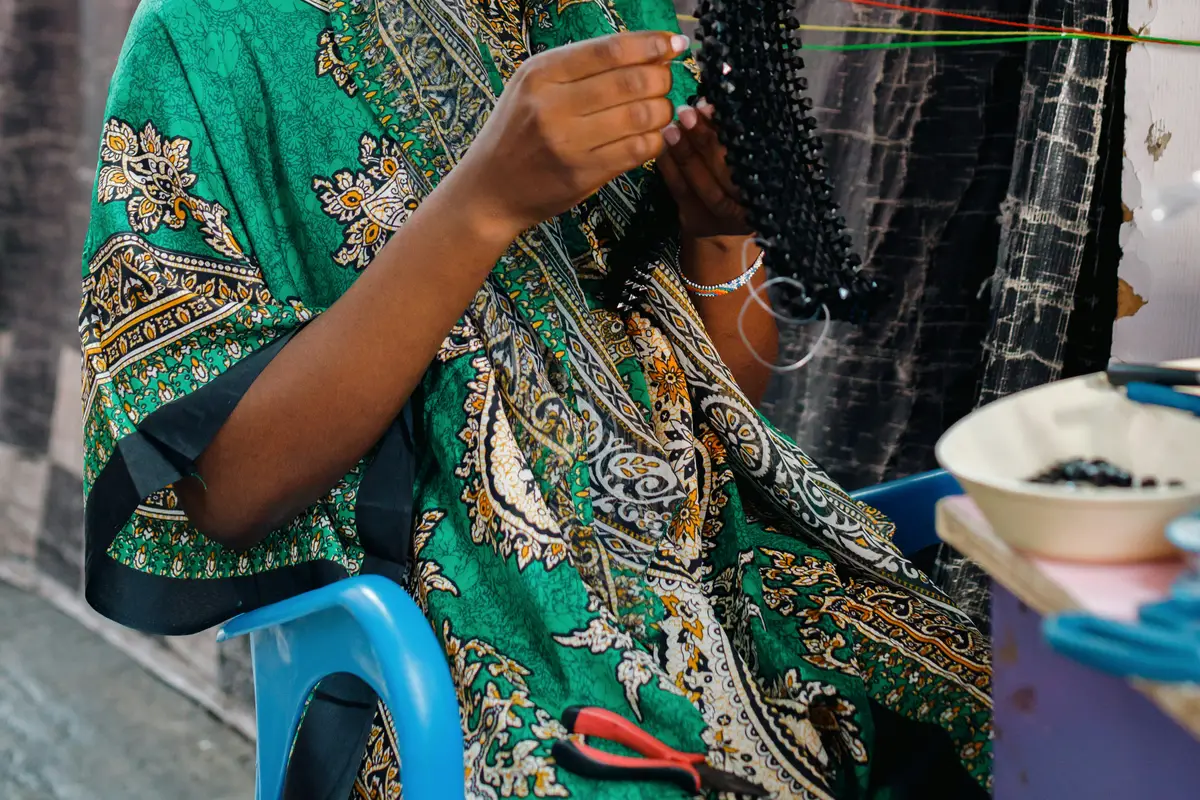
This is a delicate but crucial topic. We often use stock photos showing people with typically Nordic looks – very light complexion, blonde hair, blue eyes. While this is standard in Poland, in Spain, such a person looks like a tourist, not a local resident. If you sell cosmetics or clothes, a female customer from Seville must be able to identify with the person in the photo.
We collaborated with a natural face cream brand. The original photos showed a model with very pale skin. After switching to photos with a girl with olive skin and darker hair, the number of product inquiries rose by 31% within a month. This isn't magic; it's sales psychology. We want to buy from people who are like us. It simply pays off to think about this before shipping goods to FBA.
You don't have to immediately do a new session with Spanish models. Sometimes appropriate selection of photos from image banks, skillfully integrated into your brand, is enough. It's important to remain authentic. Spaniards are very sensitive to artificiality. Avoid overly retouched 'plastic' faces. The more natural and 'human' the character in the photo looks, the greater the trust in the brand.
How to check this for yourself without spending a fortune?
We're not telling you to throw all your photos in the trash and spend 14,000 PLN on a new photographer. That would be unwise. We propose the method of small steps. Choose your best-selling product on the Spanish market. Prepare 2-3 new graphics considering warmer light and lifestyle context. Swap them and observe the results for 14 days. If the CTR (click-through rate) and conversion move up, you'll have black-on-white proof that it's worth going further.
At Wisła Digital Strategy, we often do such A/B tests for our 47 regular clients. It usually turns out that photo optimization gives a better return on investment than just boosting ad bids. Advertising brings the customer to the store, but the photo is what makes them want to walk inside at all. Sometimes changing the main photo – the one seen in search results – can save a project that seemed unprofitable.
Finally, remember the technical requirements of platforms like Amazon or ManoMano. Spain is a market where mobile dominates even more than in Poland. Your photos must be readable on a small screen, even when someone is on the subway with poor reception. If you have questions about specific technical requirements or want us to take a look at your current graphics, let us know. Facts on the table – sometimes one small correction is enough to get sales moving.